Trace a river in three moves
A river prompt can be precise about flowing through a place, forming a border, or passing within a drainage basin. These are different map relationships.
- Find a bend you knowStart at a city, mountain range or lake along the channel.
- Follow the currentDoes it cross the country named in the prompt or only come close to it? Think of the route, not just the region.
- Check the mouthThe water it joins can solve the last part of a clue. The Vltava joins the Elbe near Mělník, for example.
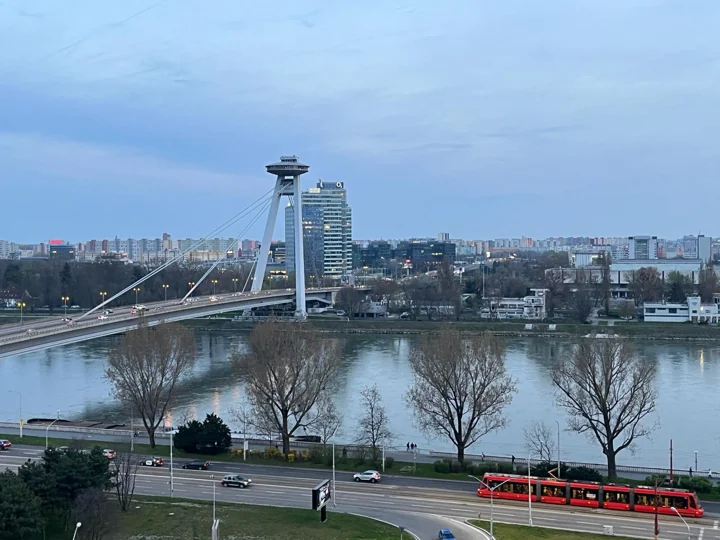
Bratislava on the Danube
Use river pairs for retrieval
These are practice links between a river and an identifiable place. A prompt that names a country may need a narrower check than the table offers.
| Example | Useful association |
|---|---|
| Tagus | Lisbon and an Atlantic outlet. |
| Oder | A stretch of the border between Poland and Germany. |
| Po | Northern Italy and an Adriatic delta. |
| Loire | Orléans and an Atlantic mouth. |
Skip the basin trap
A country can fall within a river’s basin through one of its tributaries. If a category says the main river passes through the place, picture the main channel. In a timed round, use a pairing you can explain in one sentence.
Read the map in stages
Follow the Danube through the capital cities
Picture Vienna, Bratislava, Budapest and Belgrade in order downstream. At Belgrade, the Sava joins the Danube. If the question asks for a tributary, that junction gives you Sava. If it asks for the river shared by the four capitals, use Danube.
Try walking the same route in reverse. Start from one city and name the next upstream. Then move back to the point where a tributary enters. That exercise makes the difference between a main channel and its basin feel like a place on the map.